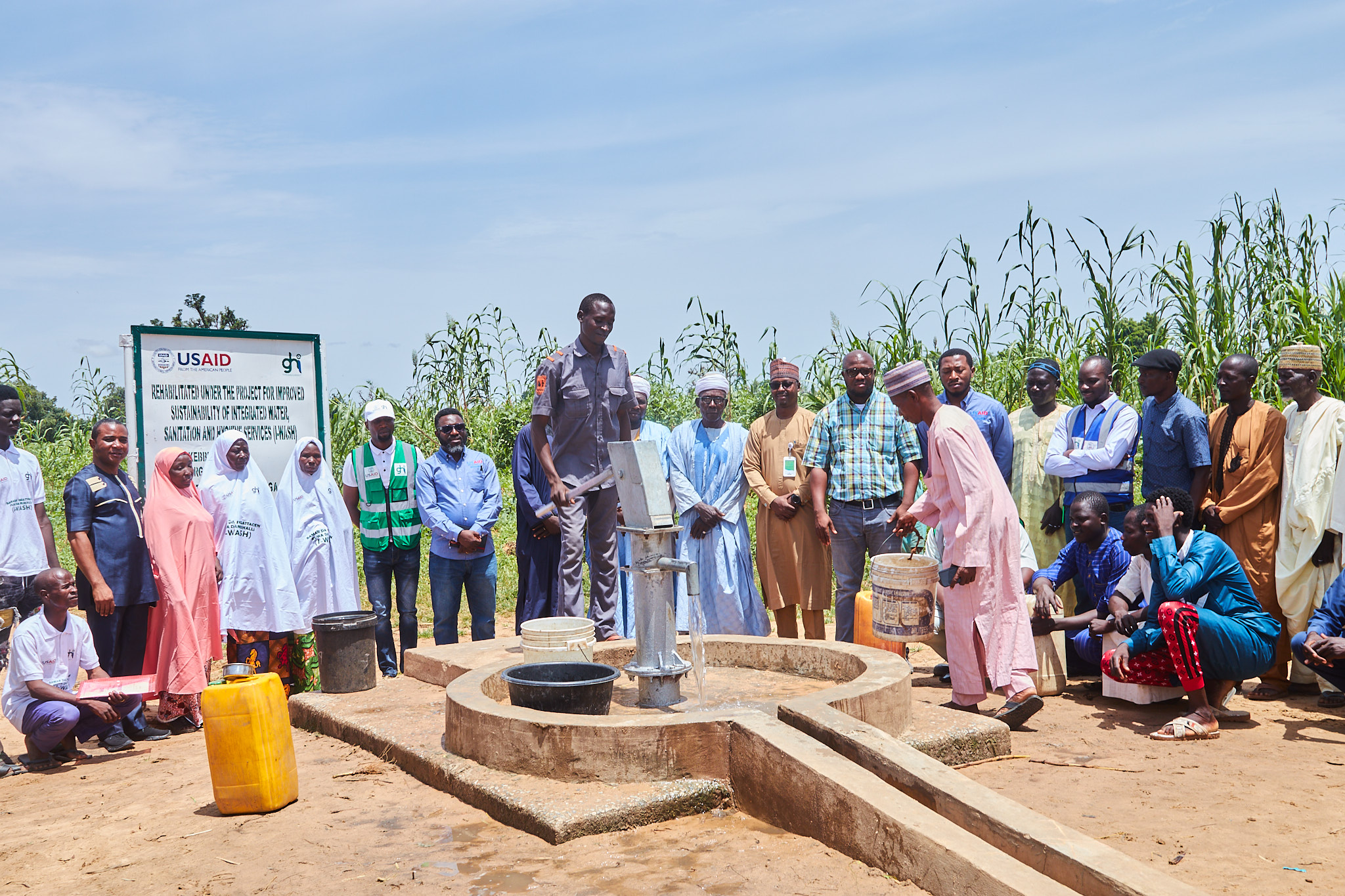

A two-day capacity-building workshop on developing watershed guidelines and best management practices (BMP) for relevant stakeholders in Kebbi State was held on the 1st -2nd November, 2021 at the Ministry of Budget and Economic Planning in Birnin Kebbi, Kebbi State. The workshop aimed to review the watershed baseline assessment findings conducted in Kebbi and Sokoto States under the Project for Improved Sustainability of WASH Services (supported by the United States Agency for International Development-USAID). And also to develop an action plan for the State.
In his opening remarks, the Commissioner for the Ministry of Budget and Economic Planning Dr. Abba Sani Kalgo stated that “There are several partners working towards the development of Kebbi State. GHI is one of such partners and I am particularly proud of them for their excellent work”. He further referred to the speech he made during the I-WASH project launch in Abuja, on the need for the government to improve commitment towards WASH services through increased budgetary provision for the sector. He assured GHI of the full support of the state government while reiterating that the workshop was an important exercise that would lead to better watershed practices in the state.
The workshop targeted stakeholders from the Ministry of Budget and Economic Planning, International Fund for Agricultural Development (IFAD), Ministry of Environment, Ministry for Water Resources, RUWASSA, Kebbi State Environmental Protection Agency, Ministry of Health, State Primary Healthcare Development Agency (SPHCDA), Ministry of Local Government and Chieftaincy Affairs, and Chairperson Coalition of Civil Society Organizations of Kebbi State. Chairpersons, permanent secretaries, directors, and deputy directors from these ministries, departments, and agencies actively participated in the two-day workshop.
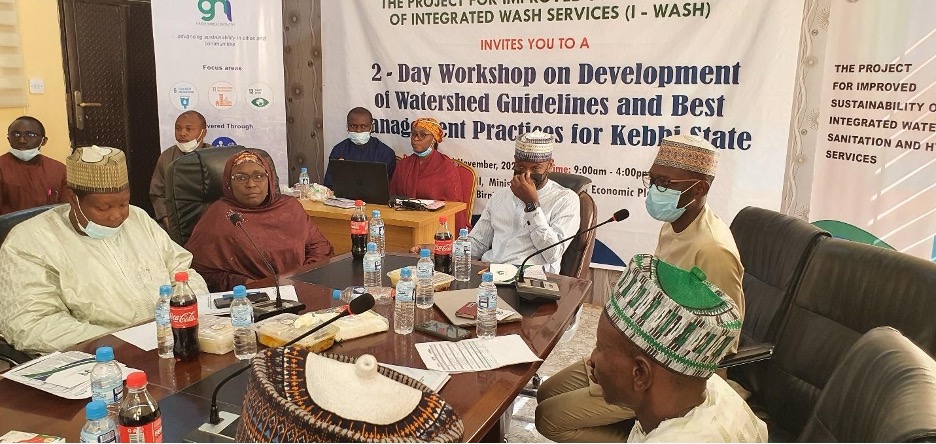
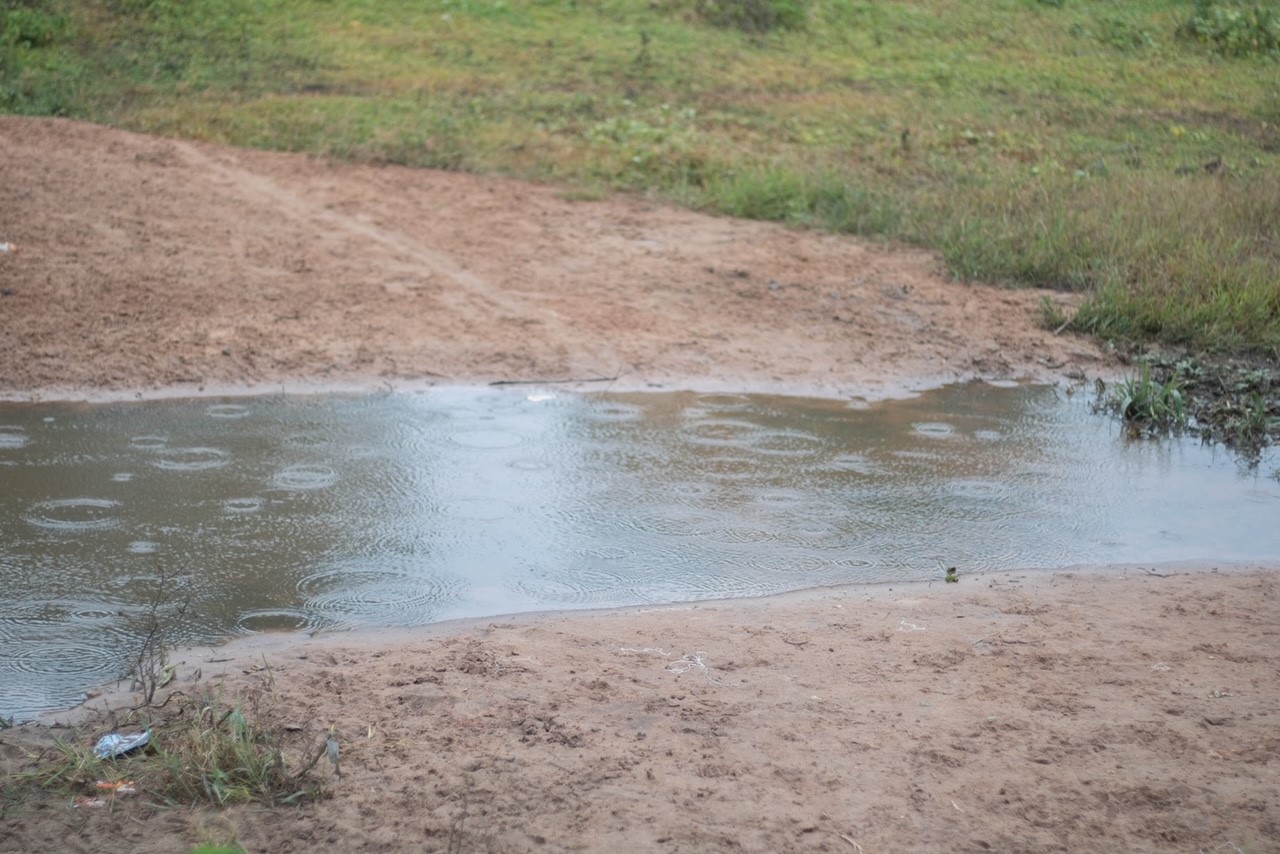
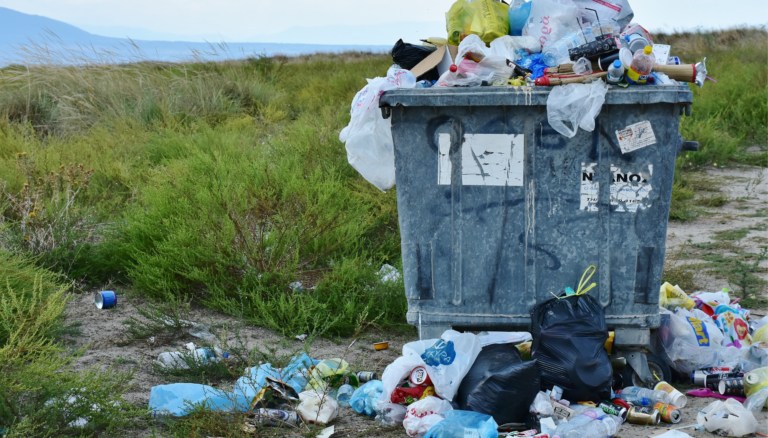
Some of the findings showed that the fecal coliform was detected in the water quality tests. Additionally, there is a steady decline in dense vegetation and shrub areas due to increasing farmlands. Some of the contaminants of water from the presentation include open defecation and hazardous practices like the use of agrochemicals like chemical fertilizers and pesticides.
All the sessions were highly interactive, and participants were enthusiastic about the workshop, commenting that it was “the first of its kind” in Kebbi State and an “eye-opener” to the current state of their environment.
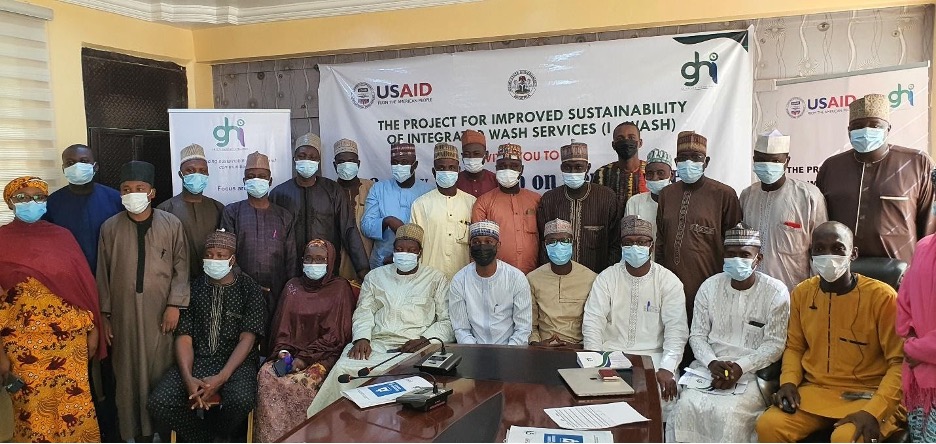
Other presentations were made by Director Planning, Research, and Statistics (State Ministry of Environment) on Environmental Sustainability and Watershed Management (Role and Activities of Kebbi State Ministry of Environment), as well as another on Watershed Management and Climate Variability by IFAD State Project Officer.
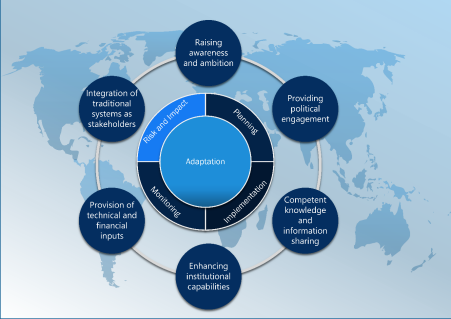
During the workshop, the Permanent Secretary Ministry of Budget and Economic Planning mentioned that the recommendations from the WBMP workshop will be integrated into the state development plan which is currently under review. A number of recommendations like public sensitization, enlightenment, and awareness of the public on water conservation, increase geophysical surveys, and enforce land use management practices among others were developed.
All the inputs and recommendations from stakeholders were consolidated into a single document for implementation by the State and will be reviewed quarterly to monitor progress.