
President Muhammadu Buhari’s COP26 commitment to net-zero emissions (NZE) by 2060 has stirred up various responses and reactions. Largely, pro-status-quo opinions ridiculed the commitment, and others thought it was outrightly misguided, emphasising the overall perception that “Nigeria – and Africa by extension – deserves all the freedom to contribute to global emissions first before committing to reducing it” In other words, use fossil fuels to industrialise like the perceived to be “developed world.” This piece will not only highlight why this belief is fundamentally flawed but also present the arguments that suggest PMB’s commitment could be the best thing to happen to Nigeria in recent times.
The feeling that Nigeria’s commitment to NZE is ill-advised stems from the assessment of the current socio-economic challenges the country is facing. In short, it is a poverty argument – Nigeria is too poor to begin the process of transitioning since it has not set up a paradigm for transition. Further arguments present the feeling that if Nigeria commits to the energy transition, it may lose out on international financing facilities that it needs to industrialise along the fossil fuel lines. More people believe that Nigeria does not have the luxury to prioritise climate-friendly development in its current circumstances. Other arguments continue to iterate that Nigeria’s dependence on crude oil makes it economically vulnerable if it should embark on energy transition processes. A more interesting one is Nigeria lacks the technical ability to industrialise along with the global plans to curb the effects of climate change.
Nigeria first discovered Crude Oil in 1956 in Bayelsa State. Before independence, Nigeria was economically driven by non-oil revenues and continued to develop crude oil exploration activities with its pre-oil economy. Since the exports of crude oil began, Nigeria faced a turbulent economic growth that has been described as a curse to the Nation. Nigeria had gotten intoxicated by the dark elixir and neglected key sectors of its economy that had been hitherto largely promising. Nigeria is known globally for repugnant insecurity and notorious poverty. These identities have been cultivated in tandem with the oil national reliance. The evidence is too obvious and overwhelming to cite. With its return to promising democracy in 1999, Nigeria had not been able to effectively industrialise. The dependence on crude oil evolved Nigeria into a “beast consumer” that can neither feed itself nor refine the very crude it depends on. Even when Nigeria was earning its highest possible income from crude oil, it failed to deliver its most elementary of infrastructural needs.
According to OPEC World Oil Outlook 2021, crude oil demands are likely to plummet over the next two decades. As the world continues to transition to cleaner energies with exponential growth in innovative technologies, the demand for crude will continue to diminish. With Europe and India gradually looking elsewhere, Nigeria’s stable revenue source will keep aging to its death regardless of local influence. Unless Nigeria finds alternative markets for its crude in Africa, it must begin to imagine an economy away from oil.
The COVID-19 pandemic has set in a new era in global economics and international business. The crude oil markets reemphasized their dependency on human activities and global environmental change. This became a revelation to economies that were hitherto unprepared to re-evaluate their economic dependencies. The relief felt by the world with the recent relative stabilisation of the oil market has been misrepresented by many parties as a return to normalcy. The reality is the pandemic has only been a prelude to more serious global challenges that should shake countries like Nigeria and other emerging economies into serious re-strategizing and planning. The fact is the next global pressure may be more serious in its effect than the pandemic which is mostly survived by victims. In the words of Bill Gates, “The world needs to rise to avert a climate crisis.”
There is still a major misconception in the net-zero emissions debate. As such, it is paramount to clarify this. In simple terms, net-zero emission means taking actions that remove the same amount of harmful emission that is injected into the micro-climates by a system. In the context of developing countries, it means implementing the directives set up by environmental regulatory bodies through environmental protection recommendations. In Nigeria, it does not mean we have to stop crude oil production. It means we should prevent carbon-positive flaring, enforce oil spill mitigation, and responsible remediation to balance the adverse effects of crude-oil pollution.
Nigeria is blessed with climate change deniers in every quarter. Those at the heart of oil production are particularly more motivated to discover the non-existent loopholes in the climate sciences. As such, there remains a collective reluctance to enforce environmental regulations and implement climate-friendly projects. A prime example is in the afforestation efforts that have been recycled in national budgets with near-zero implementation. Any attempt to undermine Nigeria’s NZE targets only enables the climate deniers to delay climate action.
According to Gadzama and Ayuba (2016), “the agents of desertification in Nigeria are climate change (especially changes in rainfall patterns), increased variability of droughts, inappropriate use of technologies in agriculture and land management, and land demand by the large population of the country. Northern Nigeria has one of the highest rates of deforestation in the world at about 3.5% (UNEP, 1993), which is driven by widespread land degradation, increasing agricultural intensity, over-grazing of livestock, and demand for fuel wood (Musa and Shaib, 2010). Assessments of desertification, its causes, and impacts have been found by several researchers for specific locations in Northern Nigeria (e.g., Ogunwale, 2015; Adakayi and Ishaya, 2016; Sulaiman et al., 2017; Oloukoi et al., 2018). However, little or no effort has been directed at its monitoring across the entire northern region bordering the Sahel”.
According to recent figures, floods make up the most frequent disaster type (UNISDR, 2018). Between 1998 and 2017, floods formed 43.4% of all recorded events and affected 45% of all individuals affected by weather-related disasters. Flood events are also projected to increase everywhere under all considered Representative Concentration Pathway (RCP) warming scenarios (Alfieri et al., 2017). In terms of social outcome, the literature suggests that following extreme weather events, the type of conflicts that are more likely to occur include communal violence and land-use disputes rather than large-scale civil conflicts (Buhaug & Seter, 2014; Eck, 2014; Fjelde & von Uexkull, 2012).
According to Nigeria’s National Emergency Management Agency (NEMA), 30 out of the 36 states were affected by the floods. The floods were termed the worst in Nigeria’s history in 40 years and affected an estimated total of seven million people (Nkwunonwo 2016). The estimated damages and losses caused by the floods were worth 2.6 trillion naira (Cirella and Iyalomhe 2018).
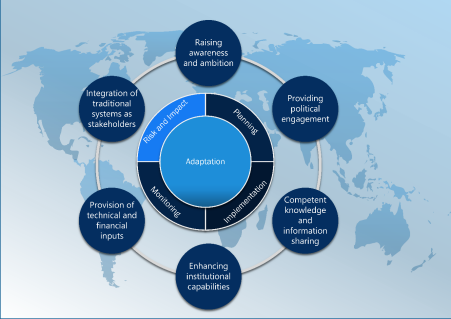
Based on assumptions of access to technology, Nigeria’s NZE target may appear ambitious. This is due to an established understanding of the cycle of technological development and adoption. While the scope of NZE is not limited to the development of energy systems alone, several assessments have focused on the impacts of NZE on Nigeria’s race to energy sufficiency. In fact, the NZE encompasses strategic measures that include mitigation and adaptation across entire ecosystems.
A lot of what was previously seen as ambitious goals has been found achievable under certain conditions. An example is the transition to remote work under the global threat of COVID-19. The previously predicted collapse of global systems was proven incorrect, and more corporate bodies have adapted to a new paradigm. Drawing from that, whether technologies would be accessible or affordable for energy transition is a function of collective will and competent strategy. The global consensus on climate action is the main driver of those conditions. The mass conviction of trendsetters in the developed world that feeds emerging economies with technology and behavioural incentives cannot be neglected.