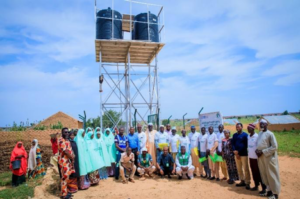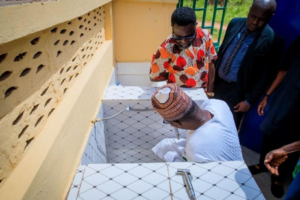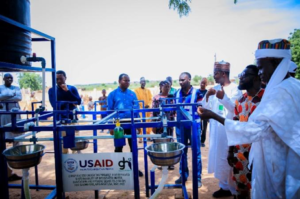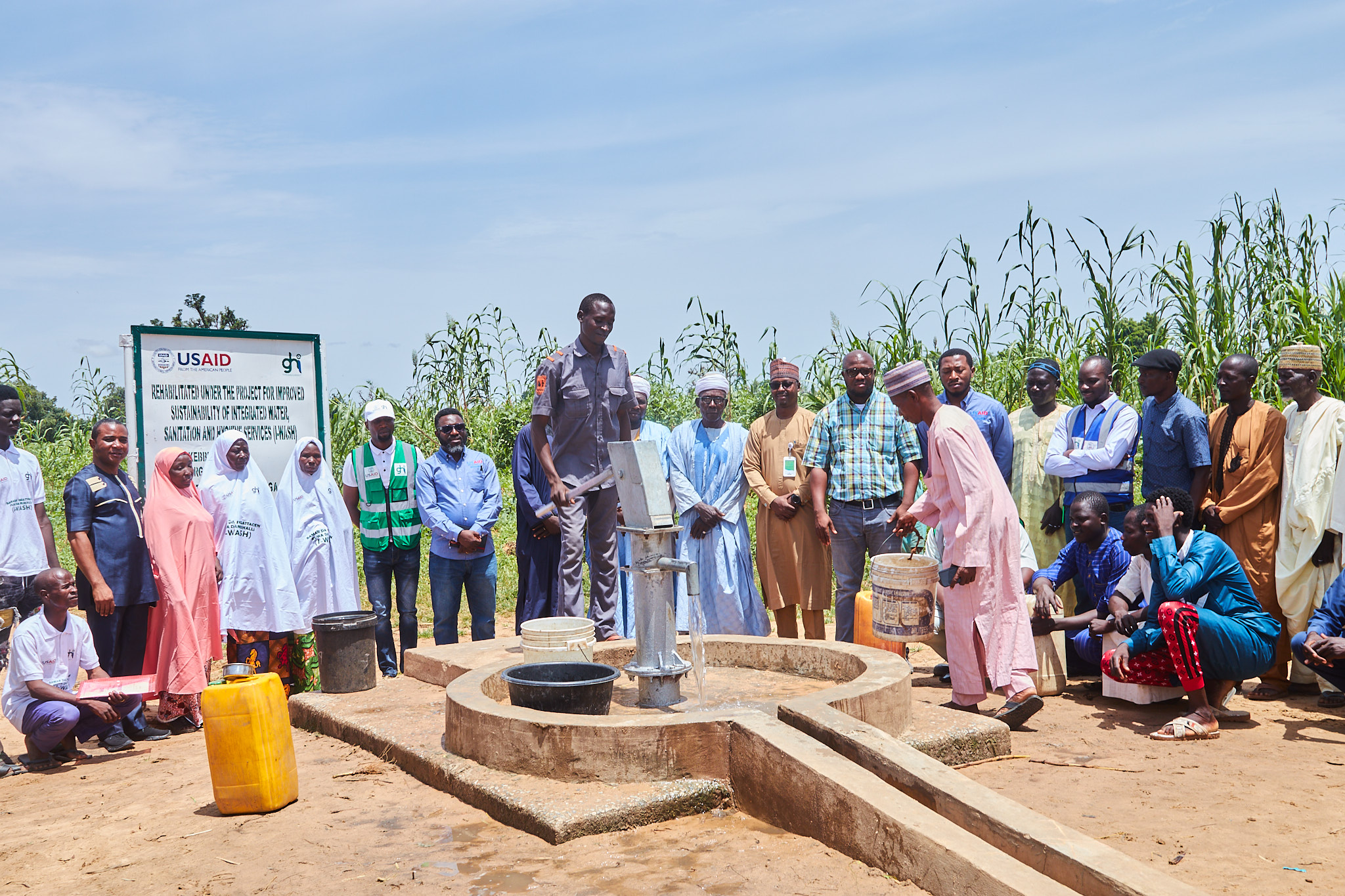

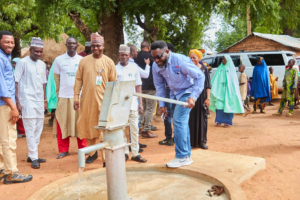
The AOR (Mr. Olagoke Akinlabi) operates a rehabilitated hand-pump in Etene community, Kalgo LGA.
The USAID Economic Growth and Environment (EGE) Team overseeing the I-WASH Activity being implemented by Green Habitat Initiative visited select project sites in Kebbi State to monitor key milestone achievements from the 27thto 28th September, 2022.
The two day visit covered construction sites across the three I-WASH LGAs including Argungu, Gwandu and Kalgo. Some of the construction facilities that were inspected included 2 rehabilitated handpumps at Etene (Kalgo), 1 rehabilitated handpump at Lailaba ( Argungu LGA) 1 rehabilitated handpump at Tungar Zazzagawa (Argungu) and 3 Solar-Powered Boreholes at Tungar Zazzagawa UBE, Sauwa UBE and Sauwa Community all in Argungu LGA respectively. Other facilities include the 2 toilets and 2 handwashing facilities situated at Sauwa UBE.
In Lailaba ward, located in Argungu LGA, the USAID team visited Katangar Arewa, a community with very limited access to potable water supply. The only accessible source of water in the community is a hand pump borehole that functioned seasonally. However, following the I-WASH intervention in the community, the handpump has now been upgraded and rehabilitated and can now serve throughout the year.
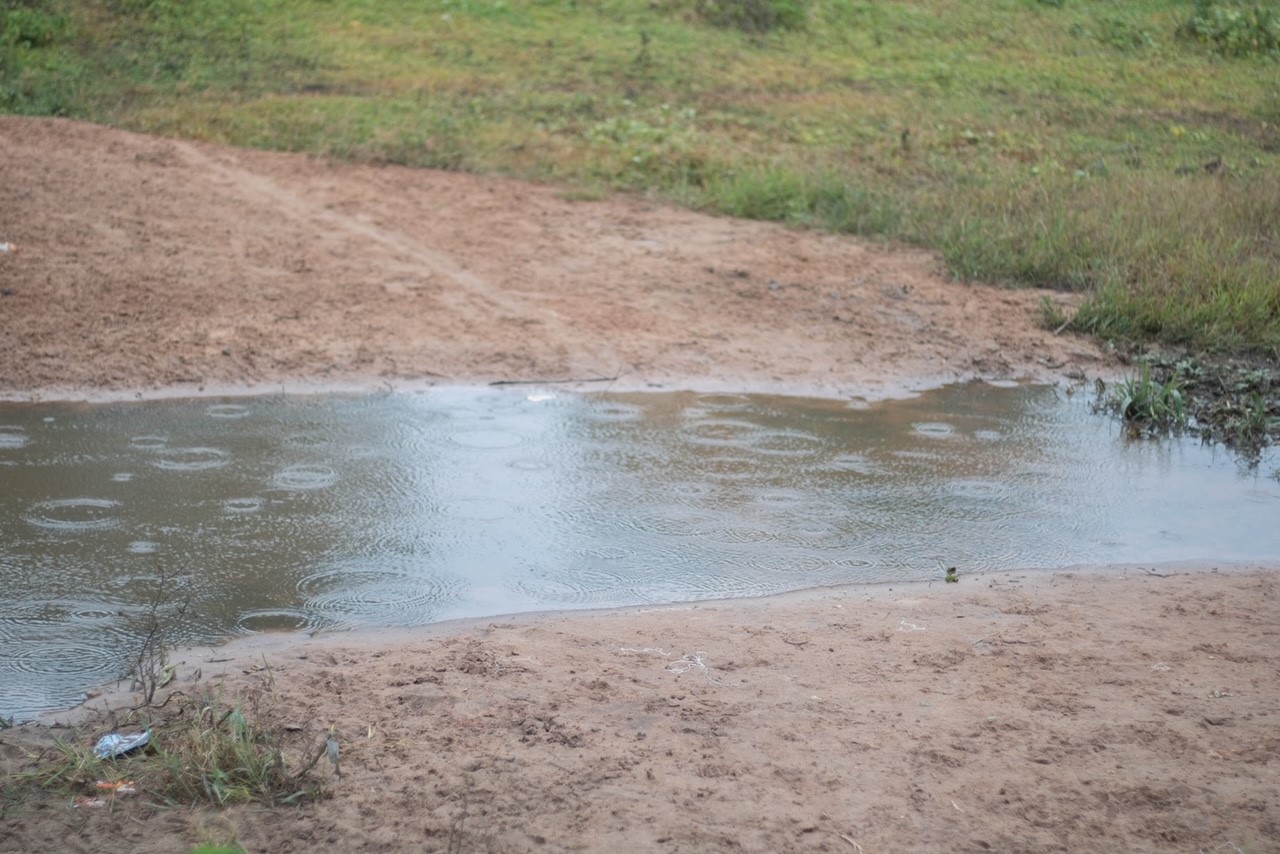
Besides Lailaba, located on an elevated landscape, the people of Sauwa community in Argungu LGA had only one major source of water in the community, which is unsafe because it is an open hand-dug well. The well also dries up when the harmattan season starts and through the dry season, leaving the community vulnerable and deprived. However, with the new solar-powered borehole installed with a capacity of 12,000 litres which can be filled up to 4 times daily, about 2,500 members of the community can now meet the basic access of 20 litres per capita per day as result of the I-WASH Activity.
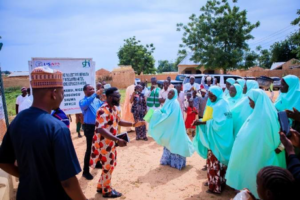
Some of the major highlights of the visit by the EGE Team was the engagement of the community members and hearing these stories first hand, other interesting outcomes of the I-WASH Activity included meeting the Water Sanitation and Hygiene Committees (WASHCOM) who are the backbone of the intervention and ensure sustainability of the I-WASH project. The WASHCOMs, established by GHI, are the community management structures responsible for coordinating all Water, Sanitation and Hygiene activities in their respective communities. The community leaders expressed their gratitude for the provision of these WASH facilities. In Sauwa, Argungu LGA, the District Head, Muhammad Tajudeen said that the water from the new Solar-powered borehole was the cleanest and most palatable water in the area.
At the end of the visit, the USAID team displayed their satisfaction with the quality of work. The USAID Acquisition and Assistance Specialist (Usen Akpan) said to the GHI Team, “You have done well and we are proud of you.” In a similar vein, the USAID WASH Specialist (Kohol Shiedu) mentioned that, “I look forward to the designs for Sokoto so we can do something even better.”
The facilities provided under this milestone has improved access to basic water supply, improved sanitation and hygiene facilities for up to 12,183 beneficiaries across the target areas.
GHI remains committed to providing access to potable water, sanitation and hygiene services to underserved communities in order to improve their health and socio-economic well-being.