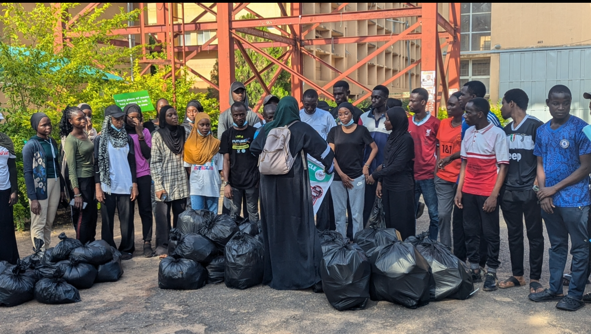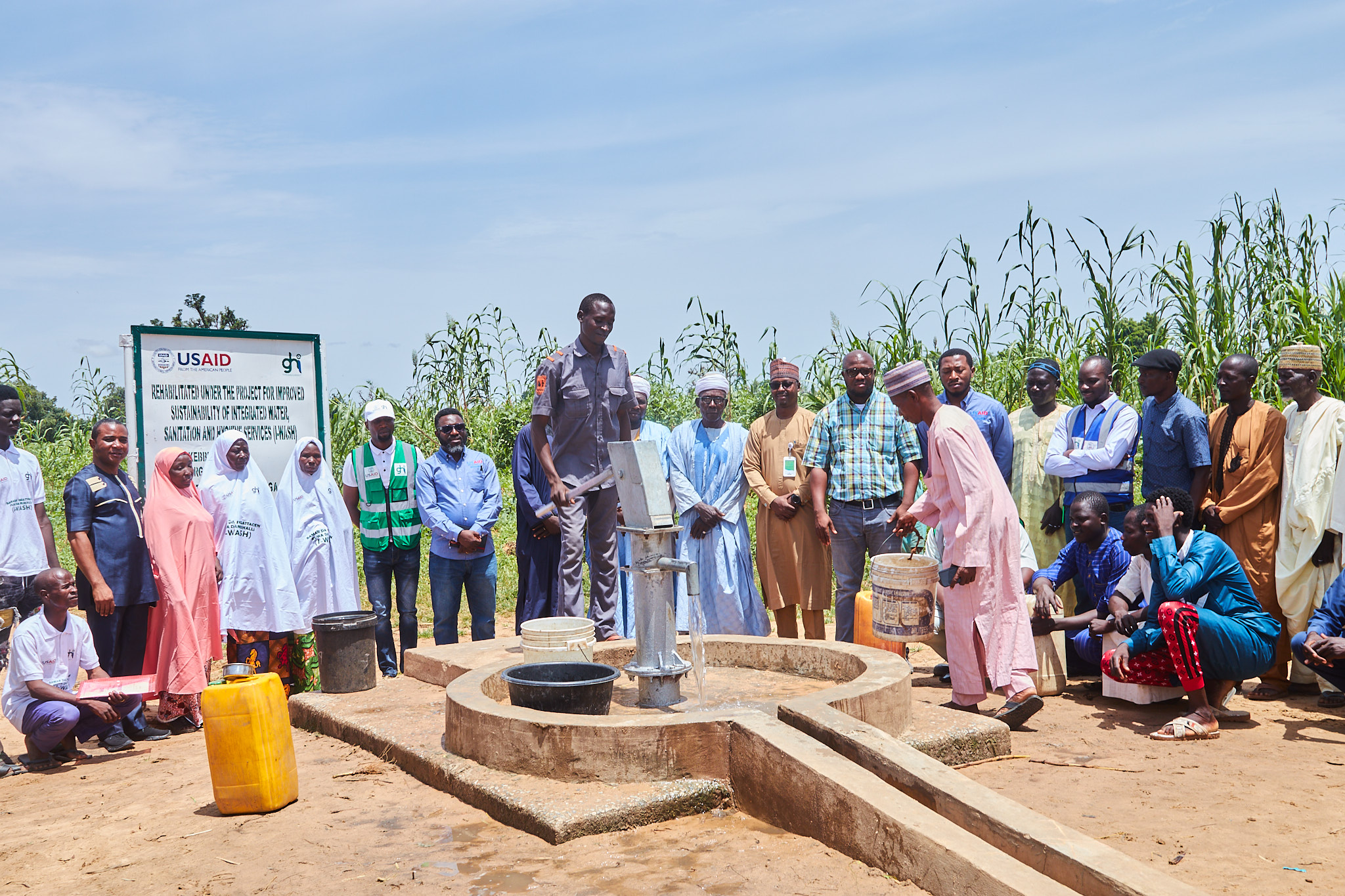


Two GHI staff, members of Dangoma Junior Secondary School Environmental Club, WASHCOM members, Patron and Coordinators of the club during the establishment of the club in Kalgo LGA, Kebbi State 01-02-2023
Children have a right to education, which includes access to safe Water, Sanitation, and Hygiene (WASH) services. Every child needs a healthy environment to learn, grow, thrive, and achieve their full potential. Even though many schools have WASH infrastructure, there is a low emphasis on hygiene education. There is mounting evidence of school WASH’s health, psychosocial, and by extension, educational benefits.
Over time, WASH in Schools conversation has changed from what works at the school level to how to reach sustainability at scale. We now understand that sustainability is beyond the building of infrastructure but rather about systemic change at the local level.
A management structure that engages the school children is needed to achieve this systemic change. This entails the formation of clubs or leveraging existing clubs in the schools to integrate WASH activities to improve hygiene promotion activities within the school and through the schools to the host communities. The clubs are responsible for taking ownership and sustainability of the school WASH projects (hardware facilities and hygiene promotion activities).
Based on this, the Green Habitat Initiative (GHI) established Environmental Health Clubs (EHCs) across the five I-WASH beneficiary schools; Dangoma Junior Secondary School, Sauwa Model Primary School, Tungar Zazzagawa Model Primary School, Dalijan Model Primary School, and Government day Secondary School Kambazza, all in Kebbi State.
Stakeholders in the Environmental Health Clubs
Various stakeholders were involved in establishing the EHCs, including the Water, Sanitation, and Hygiene Committee in the host community, the School-Based Management Committee, and LGA WASH Unit.
Nomination of Officials and Club EXCO
The students nominated officials, including the Coordinator (Health Education Teacher) and Patron (School Principal), to guide the club’s operations. Elections were conducted for the club Executives, and the following positions were contested and won. They include the President, Secretary, and Treasurer.
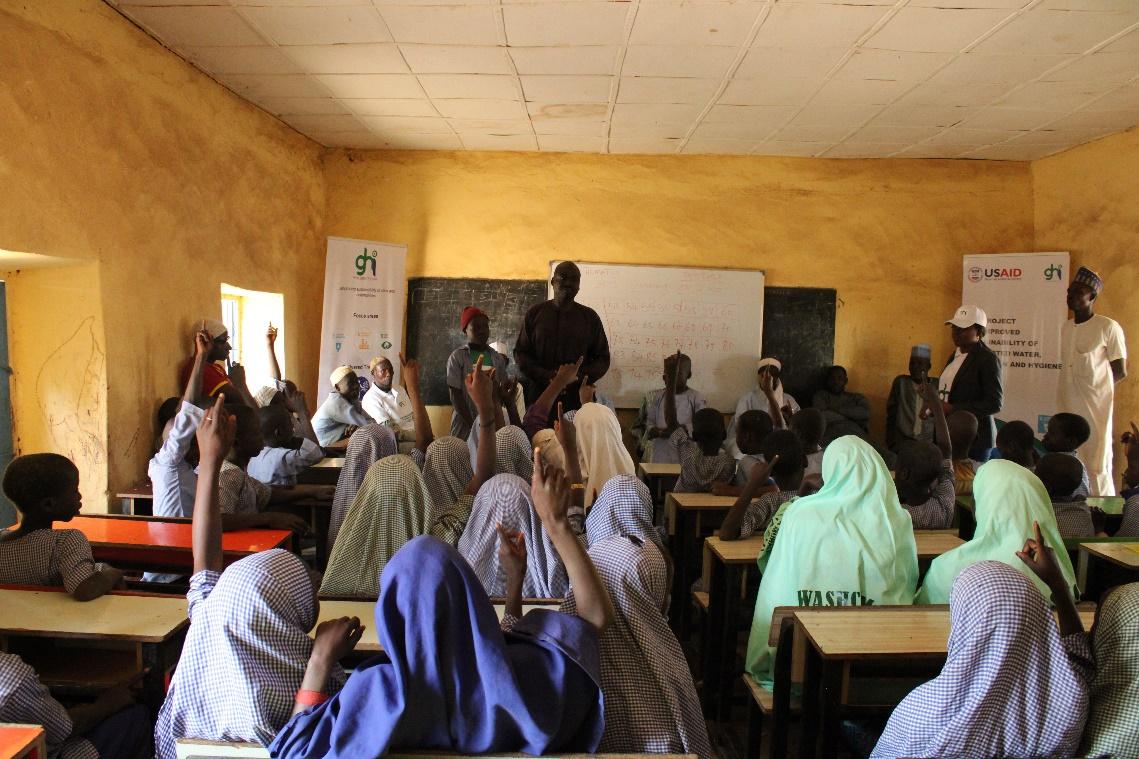
Election of club executives at Sauwa Model Primary School, Argungu LGA. 31-01-2023
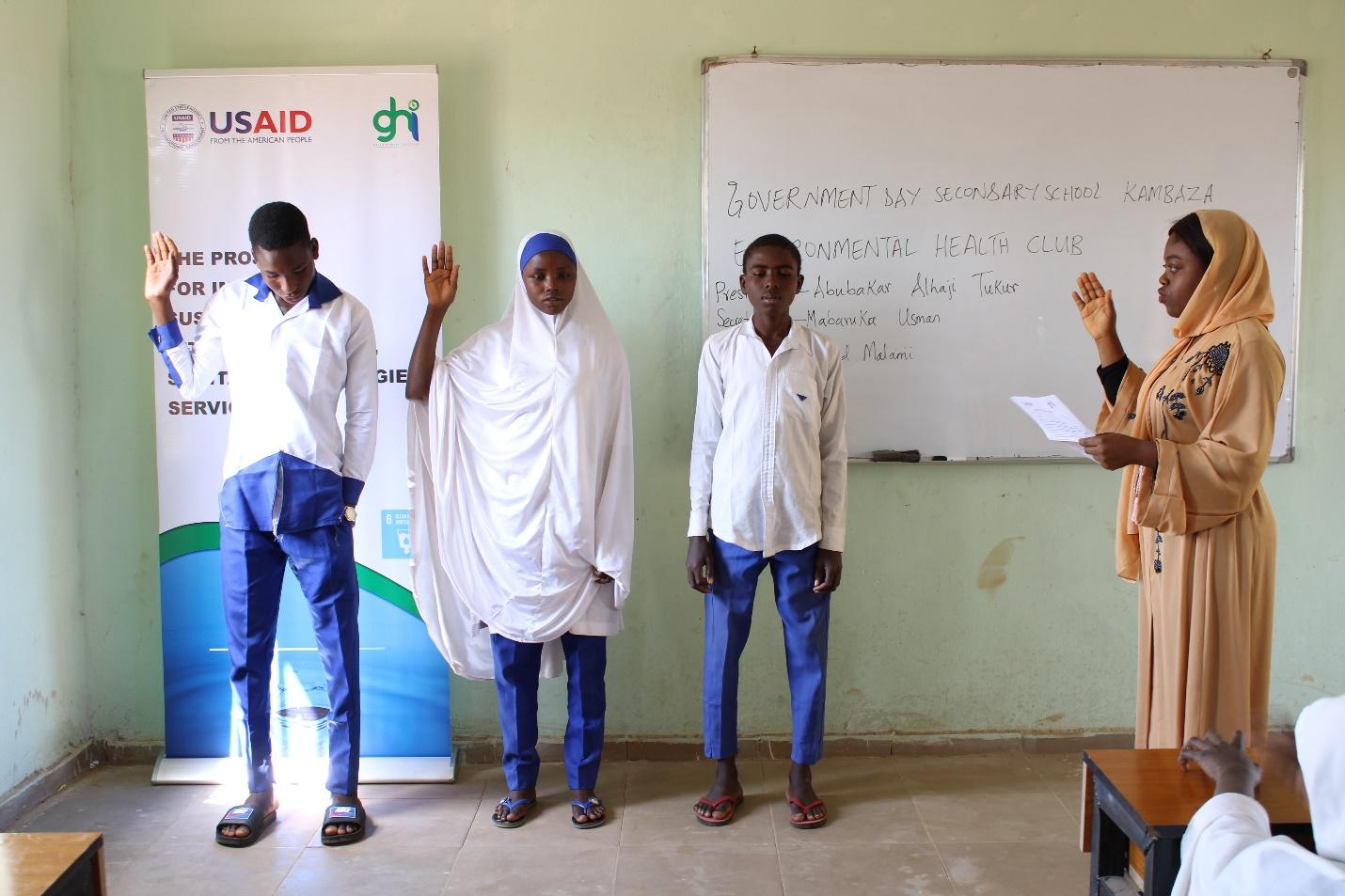
Left-Right: The Secretary (Mabaruka Usman), Treasurer (Ahmad Malami) President (Abubakar Alhaji Tukur) of Government Day Secondary School Environmental Health Club took the oath of office facilitated by the GHI WCS. 02-02-2023
Activities
Members of the newly established EHC Clubs discussed activities to be carried out, which include assembly sensitization, Environmental sensitization, Hygiene promotion campaigns (rallies), Hygiene inspection, Class visitation, Entertainment education, and outreach (community walks).
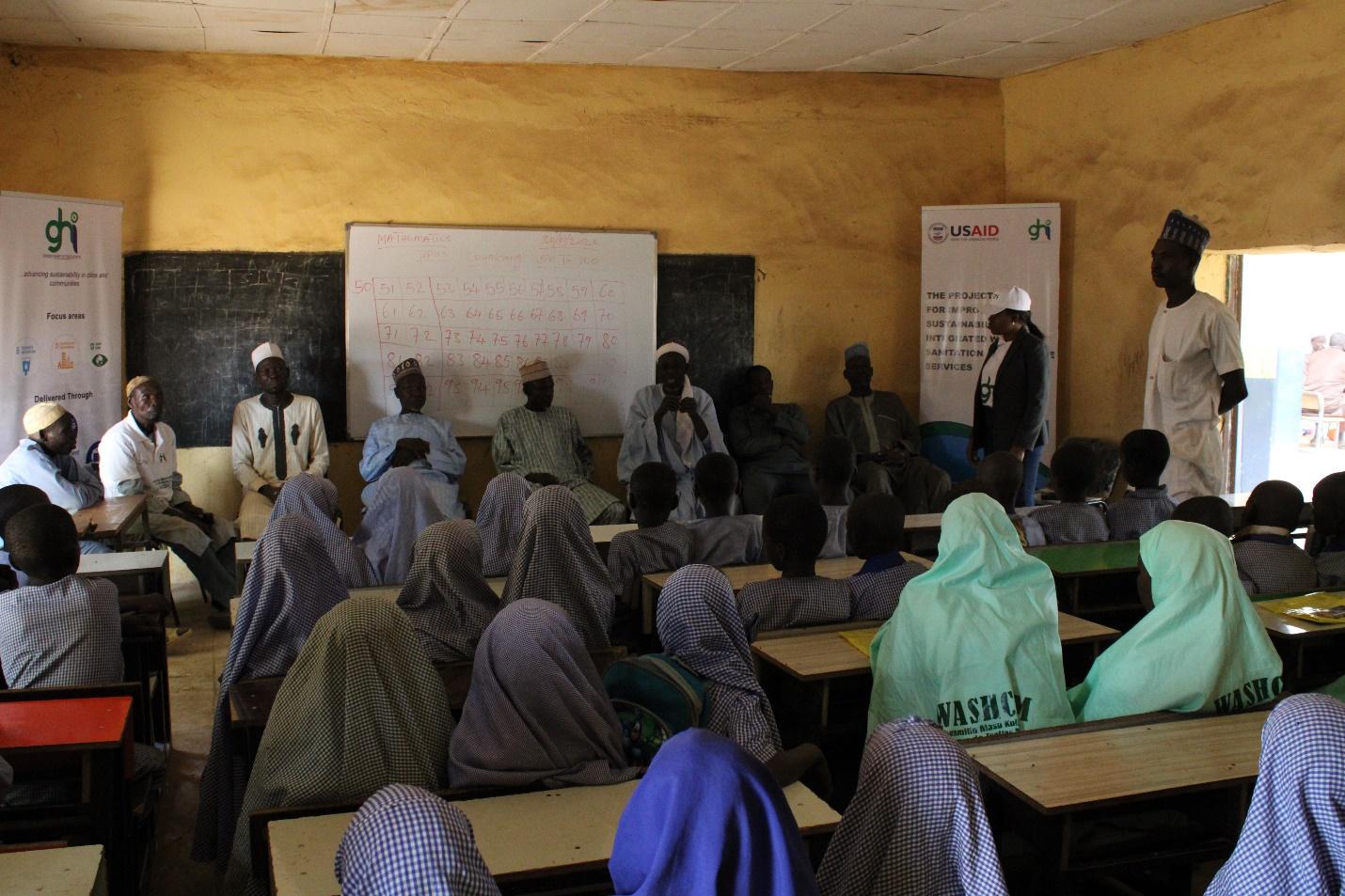
The community leader of Sauwa giving a charge to the members of the Sauwa Model Primary School Environmental Health Club 31-01-2023