
Farming is often thought of as something for the rural areas and for the rural people. Perhaps due to the reason of availability of vast farmlands, something uncommon to cities. The latter are always struggling to find spaces to develop. However, a careful observation will show that many cities, if not all, have unused parcels of lands . They remain undeveloped for a very long period of time. In order to utilize these lands before their development time comes, a new innovative use has surfaced; urban agriculture.
Defining the Concept
Urban agriculture is the growing of different types of crops, vegetables, beekeeping and even rearing of livestock. Carried out on either the underlying ground, in boxes filled with soil, in plastic pipes (vertical farms) or in water tanks or pipes (hydroponics) or all these placed on rooftops.
Urban rooftop farming is done when people have access to the flat roof of a building. Many flat rooftops are redundant. Innovation in farming has shown that we can now start growing food stuff on our rooftops in urban areas.
Urban farming is not an entirely new way of farming in cities. You may realize that you or a friend is growing some food in his compound. But urban farming is different from those traditional ways of growing fruits, tomatoes or even keeping a small fish pond in your backyard. With urban agriculture, a big part of it is commercial. Food is grown in commercial quantity to be sold to most a times restaurants, supermarkets as well as households. Therefore, if you are thinking of doing this, you should think of it as a business to provide healthier food in your city.
Benefits of Urban Farming
Healthier food because what is mostly grown is organic. Therefore, urban farming offers the opportunity of providing healthier diet to the city. It has created jobs for many people and generated lots of income. Angel, is a peri-urban farmer in Abuja. With her two farms around the city, she started her company called Fresh Directs, which generates lots of income for her. She grows and supplies supermarkets and restaurants with vegetables.
Andrea, is an urban agriculturist in the city of Malmo in Sweden. He is making $300 from the food he grows every month in his urban farm providing different types of vegetables.
 One of Angel’s farm in Abuja. The corrugated metal house is a poultry. (Credits: Self)
 Andrea and some of the food products he sells
(Source: http://malmo.se/Kultur–fritid/Idrott–fritid/Natur–friluftsliv/Stadsodling/Stadsbruk.html)
How to Start Your Urban Farm
I think what is going on in your mind is how to start this, especially if you don’t have a flat roof or a free land. Well, urban farming works in a way that you recognize undeveloped plots of land in your city, or unused rooftops, or huge containers that may be used for vertical farming. For the city I live Abuja, there are lots of them like that. You can just take a tour with a friend to make an index of areas where you see them. Or better, use Google maps, assuming it is a recent image of your city (look in the bottom right corner, the date the photo is taken is usually printed). If you choose the latter, you can easily go direct to the site to confirm for yourself.
Most of the sites are owned by individuals or at times government. With individuals, you can find out when the owner intends to develop the land. Assuming it is in the next 5 years, it is a good time to seek for a lease of that period. Although not every land lying fallow is good for an urban farm. Many people seek this lease for many other reasons in Abuja. Some operate a block making factory, others are occupied by auto mechanics and you, farming. Farming in the middle of Maitama, should you find a free plot might be impossible as city urban planning regulations does not allow farming anywhere in the metropolis. If you can find somewhere away from the public eye or in other cities with less strict development regulations, then it can be easier to start.
Societal Impacts
It is a cool way of making social, ecological and economic impact in the society. Instead of allowing the lands to continue lying fallow, they can be put to better use. It is another way of ensuring more food security and nutrition in these cities. Especially for a country like Nigeria, that is food insecure, relies heavily on imported food items, and needs to start looking for innovative solutions like this.
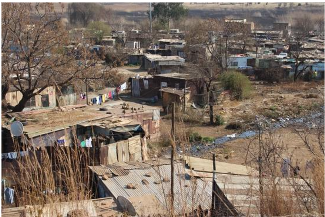
The country is also facing an unprecedented urbanization rate. According to the United Nations World Cities Report 2016, 85 more people move into Lagos every hour of a day. Abuja is already overpopulated with 6 million people, against the plan of 3 million. The city is experiencing urban sprawl, development of informal settlements and with no sufficient food to feed them.
It has therefore become imperative that we start making our cities food secured, and gradually the whole country will follow suit. Our urban planning policies should change to accommodate innovative and sustainable solutions like urban farming. Stakeholders in this should come together and start working out ways of how to get this going.
Green Habitat is working with Swedish experts in urban agriculture and will always be available in connecting interested parties with valuable resources.
For more information on urban agriculture and other environment related issues, please subscribe to our blog below.
[blog_subscription_form]
Written by Sadiq.
 Sadiq Abubakar Gulma steers the organizational mission of Green Habitat. He is a member of the Green Talents International Forum for High Potentials in Sustainable Development, a LEED accredited green building professional and has a master’s degree in Environmental Engineering. His research interest and work lie in investigating and improving the thermal conditions of urban built environments. Follow him on Twitter @TheCivineer