
In rural Nigeria, the lack of proper sanitation remains a pressing concern, often overshadowed by other development priorities. Musa Mohammed Ashabu, a community mobilisation officer in Argungu Local Government Area (LGA), Kebbi State during the I-WASH Project, encountered this challenge firsthand during his work. This article explores my experience of a house-to-house inspection in Tungar Zazzagawa ward, where I discovered a newlywed couple living without a toilet. This encounter highlights the pervasive issue of open defecation in rural communities and its significant health and social implications.
Encountering the Newlywed Couple:
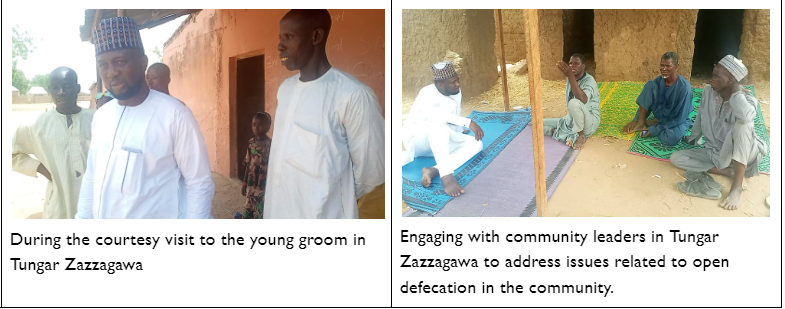
I was visiting a newlywed couple’s home in Tungar Zazzagawa. The groom, a young man, appeared enthusiastic about welcoming his bride to their new home. However, when I asked about the presence of a toilet, I was met with an unexpected answer. I was taken aback when the groom revealed that there was no toilet in his new house. It was hard to believe that someone about to begin a new life with a partner would lack such a basic necessity.
The absence of a toilet in a home preparing to welcome a bride raised serious concerns regarding health, safety, and dignity. The groom’s situation highlighted broader issues; despite having access to resources, cultural practices and possibly economic constraints made the groom forgo this essential facility. My inquiry prompted important questions about the implications for both the bride and groom. The lack of a toilet not only posed health risks but also reflected deeper societal attitudes toward sanitation.
A Common Problem:
My encounter was not an isolated incident. Open defecation remains a widespread practice in many rural areas of Nigeria. According to the 2021 Nigerian WASH National Outcome Routine Mapping, over 60% of rural Nigerians lack access to improved sanitation facilities. This statistic underscores the urgent need for interventions to promote better sanitation practices.
The Health Implications:
The absence of proper sanitation facilities poses significant health risks. Open defecation can lead to the spread of diseases such as cholera, dysentery, and typhoid. These illnesses can have severe consequences, particularly for children and the elderly.
The United Nations stated that for every $1 invested in water and sanitation, there is an estimated return of $4.30 in the form of reduced healthcare costs, increased productivity and better education outcomes.
Beyond Health: Dignity and Safety
Beyond the health risks, the lack of a toilet also affects individuals’ dignity and safety. Women, in particular, may face additional challenges when defecating in open spaces. This can include exposure to violence, harassment, and discomfort.
Cultural and Behavioral Factors
The persistence of open defecation is often rooted in cultural beliefs and practices. In some communities, there may be a lack of awareness about the health risks associated with this practice or resistance to adopting modern sanitation facilities.
CONCLUSION:
My experience sheds light on the pressing issue of sanitation in rural Nigeria. The absence of a toilet in a newlywed couple’s home serves as a stark reminder of the challenges faced by many communities. Addressing this problem requires a multifaceted approach that includes education, infrastructure development, and policy interventions. By promoting better sanitation practices, we can improve the health, well-being, and dignity of millions of Nigerians.
As Nigeria strives towards universal access to sanitation, it is crucial to remember the stories and experiences of individuals, whose insights shed light on the realities faced by many rural communities. By addressing these challenges with empathy and determination, Nigeria can create a healthier, more dignified future for all its citizens.