
Runtuwo is a community in Dangoma council ward, Kalgo Local Government Area (LGA) in Kebbi State, North-Western Nigeria. It has a population of One Hundred and Ninety Four people who are predominantly farmers and masons. Open defecation was a common practice among the people because even though most households had access to a toilet, it was not properly maintained and people preferred to defecate in the open.
In December 2021, Green Habitat Initiative (GHI) under the Project for Improved Sustainability of Integrated WASH Services (I-WASH) funded by the United States Agency for International Development (USAID) visited the community. The purpose was to drive a change in the sanitation behavior of the community through a participatory process. The community was facilitated to understand the negative consequences of their poor sanitation practices and developed a set of activities described as the community plan to end open defecation.
During the community facilitation process, Abubakar Danjarida who is a member of Runtuwo community was present and fully participated during the discussions. At the end of the session, he understood why his family preferred to defecate in the open even though he already owned two pit latrines. The toilets in his house were not cleaned regularly and it was poorly used, hence the odor and flies that constantly pervaded the house. The team from GHI and the Kalgo LGA Water Sanitation and Hygiene (WASH) unit also told them that those using a pit toilet must have a fly-proof, drop-cover to allow ventilation but prevent flies from going in or coming out of the pit.
A day after the community session, Binta, the LGA WASH unit staff responsible for conducting routine monitoring visits to his community taught his household the importance of maintaining proper hygiene and environmental sanitation. She explained to them that a toilet which is not cleaned properly can become a fixed open defecation site because of the fecal matter and make its way back to their food through flies and unwashed hands. She also told them about the different toilet options, and explained that it was like climbing a ladder. When a household moves from open defecation to using a pit latrine, they are moving up the sanitation ladder. Similarly, when they move from using a pit latrine to a ventilated improved pit, pour flush, or water cistern they are progressing towards the higher rung of the sanitation ladder.
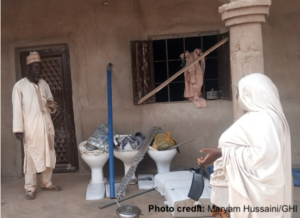
Armed with this information, Abubakar who is building a new apartment beside his old house decided to ascend the highest level of the sanitation ladder. He bought three water cistern toilets for the new building, so that he can manage his sanitation needs with better comfort and dignity. He is happy that his new toilets are easier to clean, more comfortable and free from flies.
He remarked that “My toilets are not smelling anymore and we always keep ourselves clean. I hope all my community members can construct toilets so that we will end open defecation in our community”.
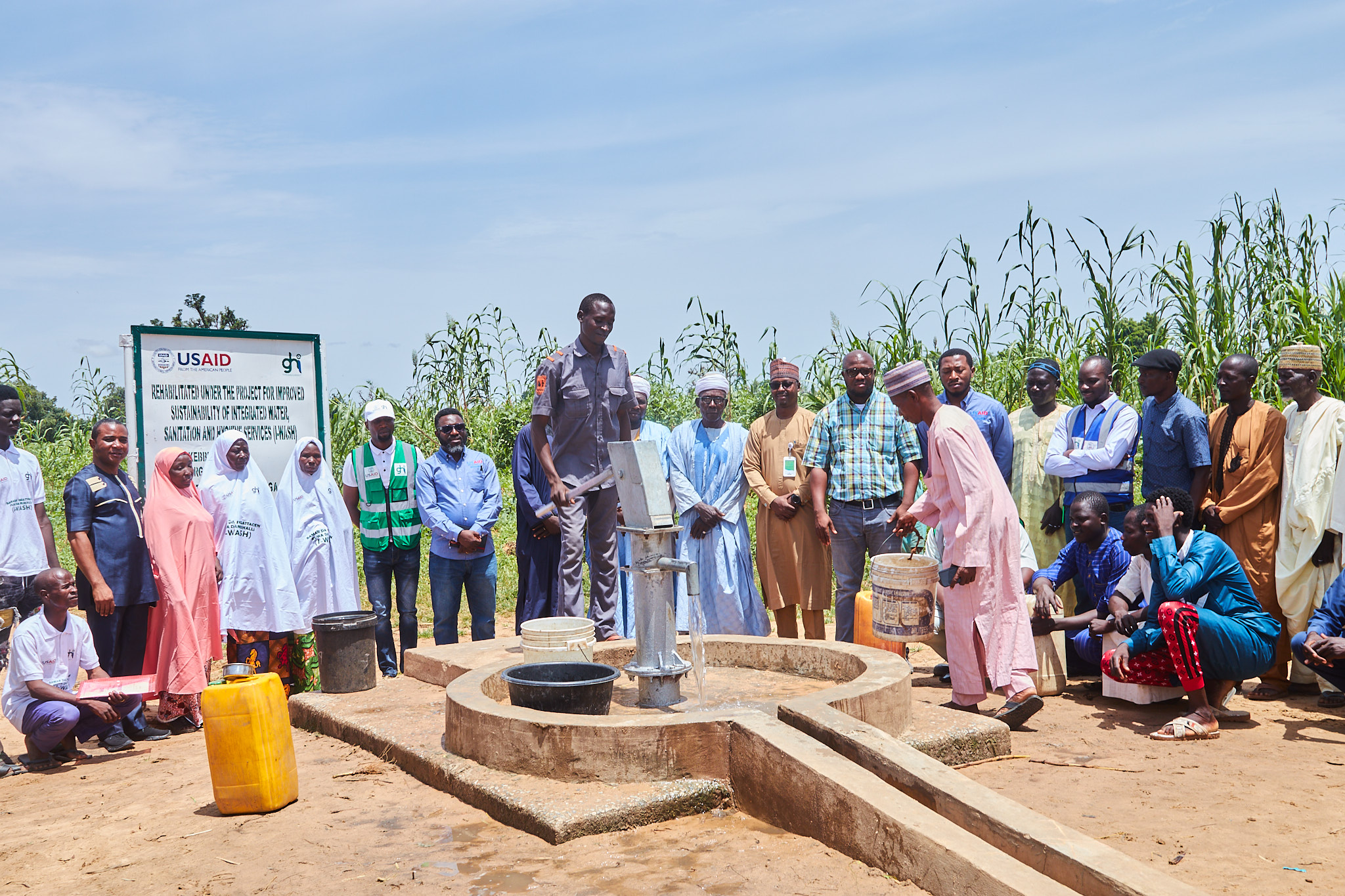
The USAID-funded I-WASH intervention implemented by GHI is increasing the number of locally-led development activities that are achieving improved results in access to sanitation and hygiene facilities. When community members move up the sanitation ladder, it shows behavior change and sustainability because they are progressing from unimproved to improved and safely managed sanitation.