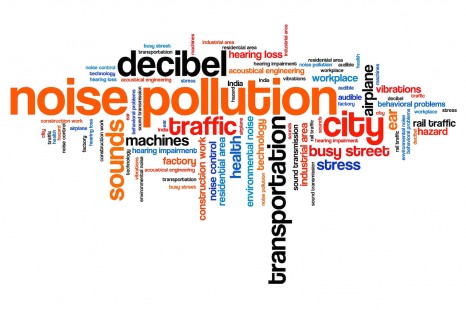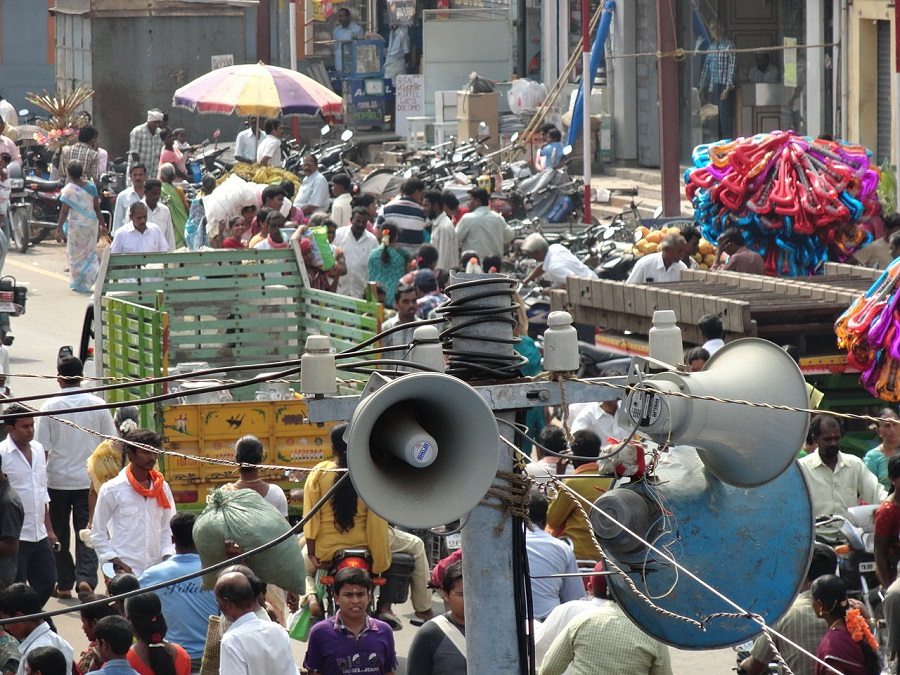

Noise is a major characteristic of cities especially in the developing world. Nigeria is not an exception. Major cities like Lagos, Kano, Port Harcourt, Aba and Onitsha have played important roles in the development of Nigeria’s economy and generated a lot of noise in the process.
People get exposed to potentially harmful noise in two key places – homes and workplaces. Homes that are not well planned for often expose occupants to road, locomotive and aircraft noise. Workplaces such as commercial areas, factories, plants, mills and workshops generate high levels of noise from the heavy machinery they use.
 Photo: Source
SOURCES OF NOISE IN OUR CITIES
In Nigerian cities however, noise at both homes and workplaces is generated mainly from power generators (Gensets) which are very common due to poor power supply across the country. These generators, usually placed at a close range from homes and workplaces to protect them from theft and for ease of access, continue to destroy the serenity of the home environment with noise and vibrations.
 Photo: Source
Another major source of noise within our cities is road traffic due to poor planning. Usually, our town planning attempts to solve the problem of noise pollution but because of poor projections of population growth, we often end up failing. Areas that were initially reserved for residential purposes, parks and recreation are often compromised for business, industrial purposes or religious houses and centers illegally. Unwarranted horn-blowing and faulty vehicles that are unworthy of being on the road further worsen the generation of road traffic noise. Such practices have made the task of noise control even more hectic than necessary.
Short-term noise pollution from events and parties contribute to noise pollution in our cities. In most neighborhoods inhabited by low and middle-class members of society, noise pollution is severe because of lack of awareness and poor implementation of noise regulations. In fact, it has become the norm in some areas such that reporting an instance of noise pollution is considered strange and would not be taken seriously by authorities.
EFFECTS OF NOISE ON OUR HEALTH
The human ear is designed to regulate sounds between 0 – 160 decibels. While that range accommodates most artificial sounds, the healthy level of sound for the human ear is below 80 decibels (dB). Sounds that exceed the upper boundary of the healthy range begin to create health challenges in people and animals.
There are various negative effects of noise on the human being. The World Health Organization (WHO) through a partnership with the European commission conducted a study which revealed that loss of hearing, cognitive impairment, hypertension, myocardial infarction, sleep disturbance; tinnitus -leading to psychological distress, depression, communication problems -and annoyance are some of the health problems caused by environmental noise.
The harm caused by noise depends on the level and duration of exposure. The higher the noise level, the faster it causes harm; for instance, hearing a gunshot, siren or an explosion at close range could cause instant loss of hearing or tinnitus. On the other hand, exposure to noise from heavy road, locomotive or aircraft traffic for several hours per day could cause cognitive impairment in children, sleep disturbances and even depression in certain cases.
NOISE CONTROL IN OUR CITIES
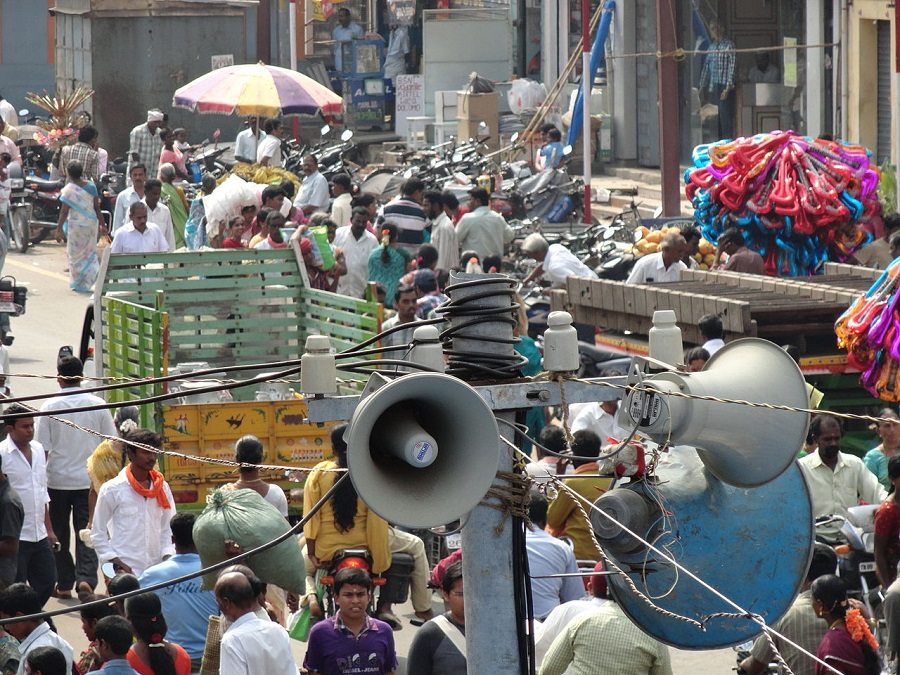 Photo: Source
Nigerian cities should not be allowed to grow without adequate noise control and for existing infrastructure, regular noise audits need to be conducted to ensure that healthy noise levels are maintained. National Environmental Standards and Regulations Enforcement Agency (NESREA) -The governmental agency responsible for the development and enforcement of environmental regulations- had developed the National Environmental Noise Standards and Control Regulations in 2009 and is working towards achieving its mandate. The efforts of the agency need to be supplemented through standard indigenous sustainable solutions.
Noise is effectively controlled by manipulating its transmission and reception. In order to minimize noise pollution, noise has to be lowered either at the source or the receiving end depending on the nature of the source. Source-oriented noise reduction for road traffic noise includes the use of low noise emitting vehicles and fitting cars with efficient silencers. Noise barriers made from concrete, steel, plastic, wood minimize road traffic noise at the receivers end. While these materials help to reduce noise levels significantly, there’s a need to develop more sustainable solutions for environmental noise reduction that leave even lower carbon footprints. Solutions forged from the use of locally sourced materials such as fibers, wood and recycled plastic would not only lower costs of implementation but also stimulate local innovation and improve economy.
Research conducted in Singapore recently explored the use of vegetation for road traffic noise reduction in urban cities. The research observed a noise reduction of 50% where a minimal to moderate planting intensity with a depth of five meters (5m) of vegetation barrier was implemented. This solution is a very effective one as it does not only reduce road traffic noise but also fights desertification, erosion of roads and lowers air pollution.
HOW TO ACHIEVE LASTING NOISE REDUCTION
The key to mitigating noise pollution in Nigeria is in the realization that the responsibility for keeping a healthy environment does not belong to the government alone. Citizens across all fields and disciplines need to involve themselves in this universal task. Doing so would create a consciousness that would enable urban planners to plan more functional cities, architects and engineers to develop noise reducing homes and workplaces, construct roads with sustainable materials that ensure noise reduction and government officials to enforce noise regulations. It would also enhance effective planning in transportation, building and construction activities to provide for minimal public disturbance.
Effective noise regulation in Nigeria cannot be achieved by NESREA without the support of other relevant agencies. Ministries and departments of power, works, housing, aviation and transportation must cooperate and collaborate with NESREA to enforce and develop solutions to noise related issues.