
Since the Nigerian civil war of 1967, Nigeria’s ecosystem is only suffering the next big anthropogenic attack at two main fronts; southern oil spill caused by pipeline vandalism and oil bunkering and the northern bomb blasts and gun violence caused by Boko Haram insurgency.
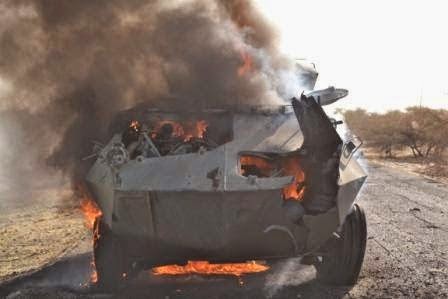
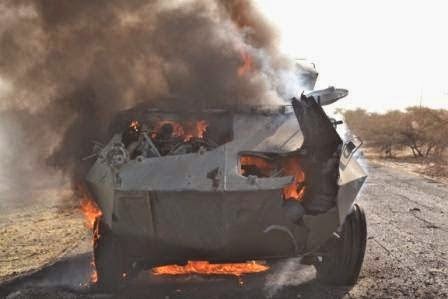
Military vehicle burning during fight against insurgency in Borno source
Naturally, efforts are directed towards securing the affected areas from the aggressors and insurgents to protect lives and property. The means by which these efforts are put are peaceful in the rarest ideal cases whereas in reality, such conflict resolution processes include military intervention resulting in the use of military equipment in combat and warfare.
Whenever humans have encountered such times of terror, the immediate hope is for restoration of peace by bringing an end to all the gun shootings, bomb blasts and explosions. It is often after peace is restored that developmental strategies begin to come back to life. Such is the case of Nigeria’s current struggles in the Niger Delta and the North Eastern regions.
During such times of serious unrest, bringing up environmental consciousness is considered a digression from the main issue at hand. The fact however remains that whatever the outcome of such unrest, whether resolved or not, the environment is always negatively affected and that is only seen when restoration plans are put on the table.
Environmental and Human Health
In times of war and conflict resolutions, weapons used are manufactured to effect maximum damage to human lives and property. Such weapons are composed of toxic substances such as heavy metals in bullets and explosives and poisonous hydrocarbons from fuels and landmines. Explosions and gunfire are major causes of forest fires during war creating serious pollution of air, water and arable soil.
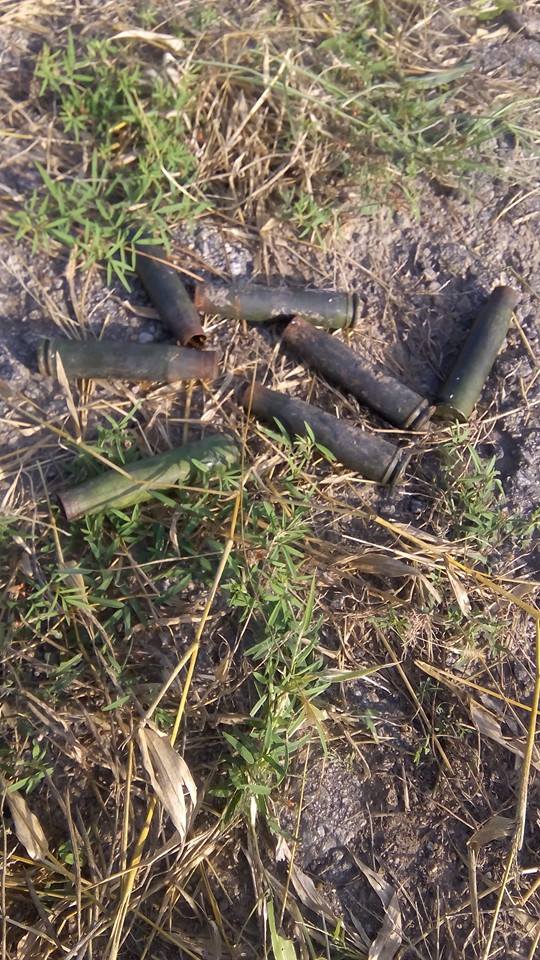
Bullet casings seen by the road in Mafa LGA, Borno source
The impact of pollution caused by wars is not short lived. In the most globally unforgettable outcome of the Second World War, the victims of the Japanese Hiroshima and Nagasaki atomic bomb blasts continued to suffer serious health problems like leukemia for decades due to exposure to harmful radiation from their surroundings. In wars free from atomic bombs, plastic and metallic shells from bombs and explosive devices find ways to remain in the environment having been washed away to water-bodies or buried underneath the topsoil.
Particulate matter (dust and ash produced as a consequence of burning) and gases emitted end up mixing with atmospheric gases to contaminate the air thereby resulting in respiratory diseases such as asthma, emphysema and lung cancer in humans or constitute acidic precipitation which is toxic to plants, terrestrial animals and aquatic species in fresh and salt waters.
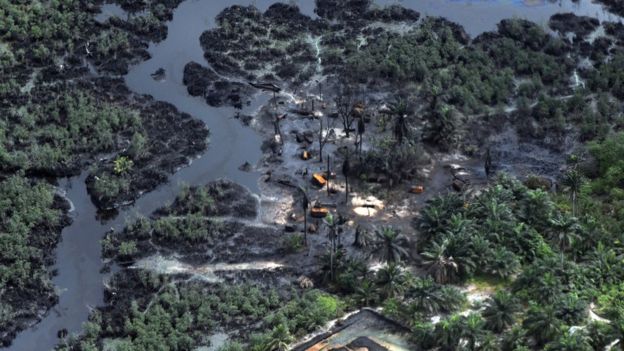
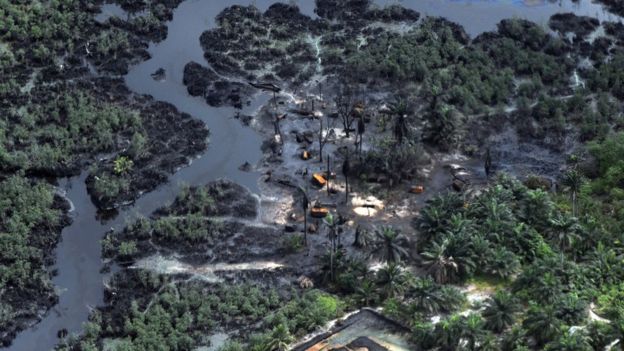
Polluted aquatic ecosystem destroying various species in Niger-Delta source
Economic and vegetative losses
The soil, unlike water or solar energy, is a non-renewable natural resource which must be well maintained through sustainable exploitation. Insurgency in the North has exposed arable soils around local communities and within forests to pressure from chemical pollution causing nutrient imbalance and loss of soil organic matter, movement of heavy equipment causing compaction and loss of soil texture and interrupted environmentally friendly developmental projects such as afforestation and desert reclamation. Consequently, farming activities which serve as a major source of income generation in the North has become threatened affecting the lives of the local dwellers. The degree of contamination however is not uniform across all affected areas as some are more severe than others. While some farms may still be cultivable, there are still risks of harvesting poisoned yields from such lands due to infiltrated toxic chemicals if they are not properly reclaimed and decontaminated.
Oil Spills in Nigeria’s Niger Delta region have contributed immensely to the intoxication and degradation of aquatic subsystems and arable lands in southern Nigeria. An area once known for its active fishing and specialized farming practice can hardly support algae and other aquatic micro-organisms. This is often discussed as part of the genesis of the unrest in oil rich southern Nigeria.
Reclamation and Recovery
The nature of Nigeria’s current anthropogenic attack is different from common occurrences due to the terrorist element, duration and the victims of the attack. Therefore, the nature of the environmental recovery and reclamation must fundamentally cater for the immediate needs of host communities in form of sustainable relief and intervention schemes. These should be used as avenues for the introduction and promotion of more eco-friendly alternatives to conventional resources such as solar-powered electricity and water systems, recycling and reuse of recyclables and efficient usage of resources. Reclamation should commence at the most vulnerable parts such as surface waters and community wells as well as adopt biological remediation techniques using plants and micro-organisms at the cleanup phases. By-products of the cleanup should be recycled or properly disposed.
The practice of conducting environmental impact assessments before projects are initialized is commonplace in the promotion of environmental consciousness in our developmental processes. This time, the remediation should be enriched with revival of native terrestrial and aquatic species to better preserve socio-economic and cultural essence of the region.
The responsibility for maintaining a functional biodiversity is a collective one that should be spearheaded by the government as key stakeholder in preserving the nation’s natural resources. An environmentally conscious government would train security forces by integrating environmental awareness into training programs for improved environmental protection and management. Simultaneously, private companies, commercial bodies, unions and civil organizations as well as individuals must assist in enhancing this strategic mission because the value of a healthy environment can never be overemphasized.
Written by Adam.
 Adamu Abdullahi is a contributor at Green Habitat Initiative. A master’s degree holder in Environmental Engineering from Warsaw University of Technology in Poland. He is interested in renewable energy, environmental solutions and innovative technologies for sustainable development.
Follow him on twitter @assyrianliege