
PRESS RELEASE November 30, 2022
PR/2022
USAID Commissions I-WASH Facilities to Reduce Water-Borne Diseases and Socio-Economic Challenges in Kebbi State
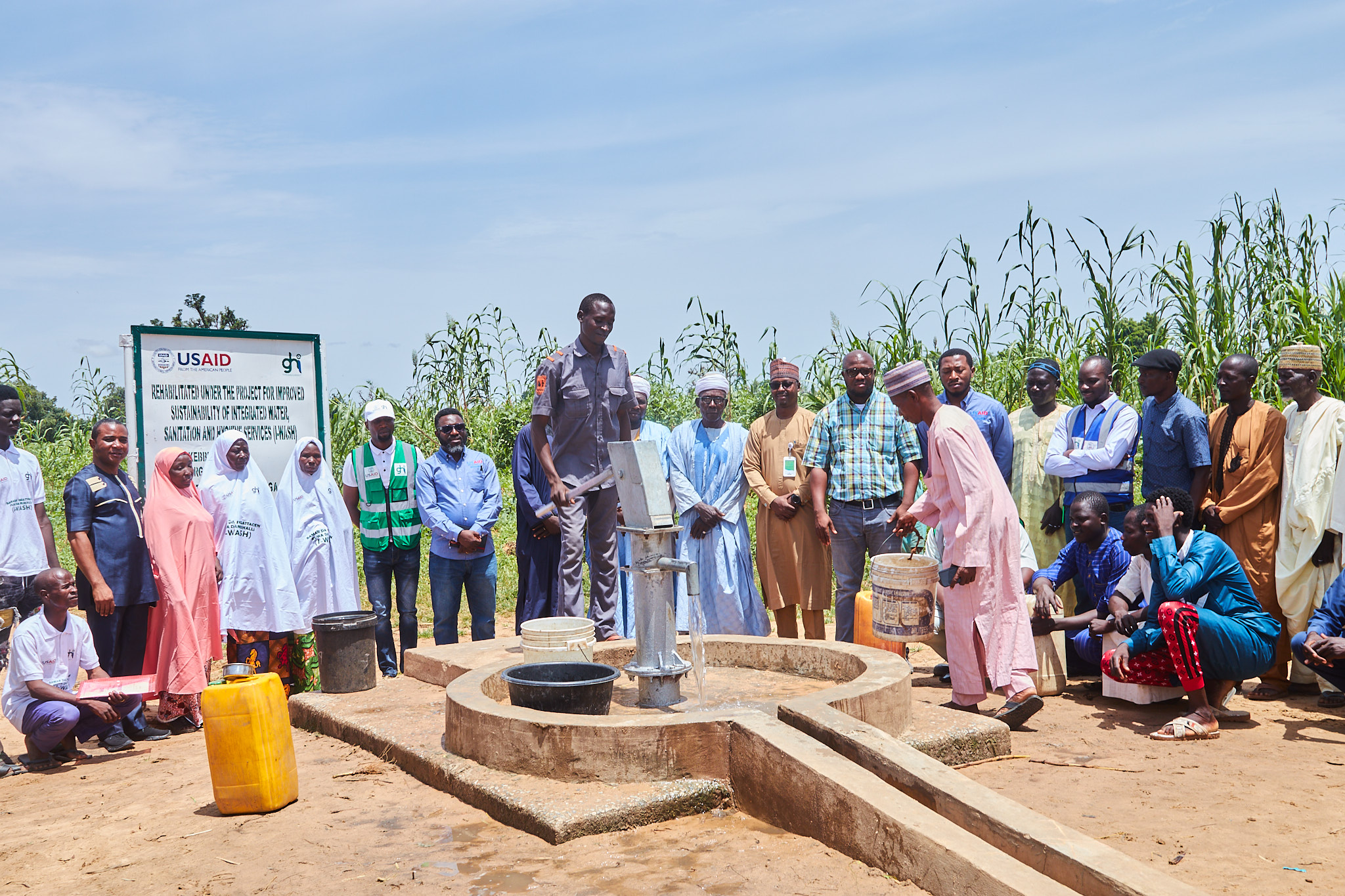
On the 30th November, 2022, the United States Agency for International Development (USAID) and Green Habitat Initiative (GHI) commissioned water, sanitation and hygiene facilities in Kebbi State, under The Project for Improved Sustainability of Integrated WASH Services (I-WASH). The Project aims to reduce water borne diseases and associated socio-economic challenges, by increasing sustainable access to improved and inclusive Water, Sanitation, and Hygiene Services in underserved schools, primary health centers and communities across Gwandu, Kalgo and Argungu LGAs.
GHI constructed 14 new solar-powered water facilities, rehabilitated 20 boreholes, constructed 10 new sanitation (toilets) facilities and 10 new handwashing facilities with funding from the United States Government through USAID. Consequently, the project has impacted around 46,000 beneficiaries with access to improved water, sanitation and hygiene facilities.
Furthermore, I-WASH supported State and Local government institutions as well as communities to promote safe sanitation and hygiene behavior, good water resources management and ending open defecation. These activities were implemented through a participatory approach that leverages public and private partnerships thereby triggering all stakeholders to action and stimulating the WASH market.
The facilities were commissioned and declared open by the Commissioner for Budget and Economic Planning of Kebbi State, represented by Hajiya Aisha Usman, the Permanent Secretary, Ministry of Budget and Economic Planning. In her speech she highlighted the numerous activities of the United States Agency for International Development (USAID) in the State, ranging from healthcare, education and WASH. She acknowledged and commended USAID and GHI for the significant impact it is making in Kebbi State. The Permanent Secretary also congratulated the GHI on the extensive work and impact in the WASH sector of Kebbi State. She also assured of the State Government’s support to continue to work with all partners to improve WASH services in Kebbi State.
In a similar vein, the Emir of Argungu, Alhaji Samaila Muhammad Mera CON, represented by Kundudan Kabi, Alhaji Ibrahim Hassan Kwaido commissioned water, sanitation and handwashing facilities under the USAID funded I-WASH Project in Argungu LGA. He mentioned the importance of good sanitation and hygiene behavior in preventing water-borne diseases and urged community to ensure the sustainability of these facilities. In closing, he thanked and prayed for the USAID and called on all the subjects of the kingdom to pray for the Agency and GHI for such a special gift, the gift of water and sanitation facilities in especially schools where they are needed most to support our children and help keep them in school.
In his remarks, the Chief Executive Officer of GHI, Engr. Abubakar Sadiq Gulma noted that the funding and support for the facilities provided were from the American people, through the USAID. He especially thanked the Agency for its tremendous effort in the ongoing fight against water-borne diseases and associated socio-economic challenges in the region. He harped that the success recorded by the support of the USAID, has increased water supply in rural Kebbi State for well over 40,0000 people.
Engr. Gulma also thanked the State Government of Kebbi as well the communities and other relevant stakeholders for their support throughout the Project implementation. He noted that the vision to reduce water-borne diseases is now being realized in Kebbi State through the I-WASH Project and other efforts from the State Government and relevant partners in the sector. Furthermore, he called on the leadership structures across the stratum to lead with a strong ownership and maintenance culture for the sustainable management of these facilities that have been provided.